 NovaMotion
Rehabilitation you can see getting better.
NovaMotion turns an ordinary camera into a rehabilitation assistant. It watches every exercise, guides the patient as they move, and gives clinicians clear proof of recovery, session after session.
For doctors and therapists. Use Login or Register at the top right. New accounts are approved by the clinic administrator.
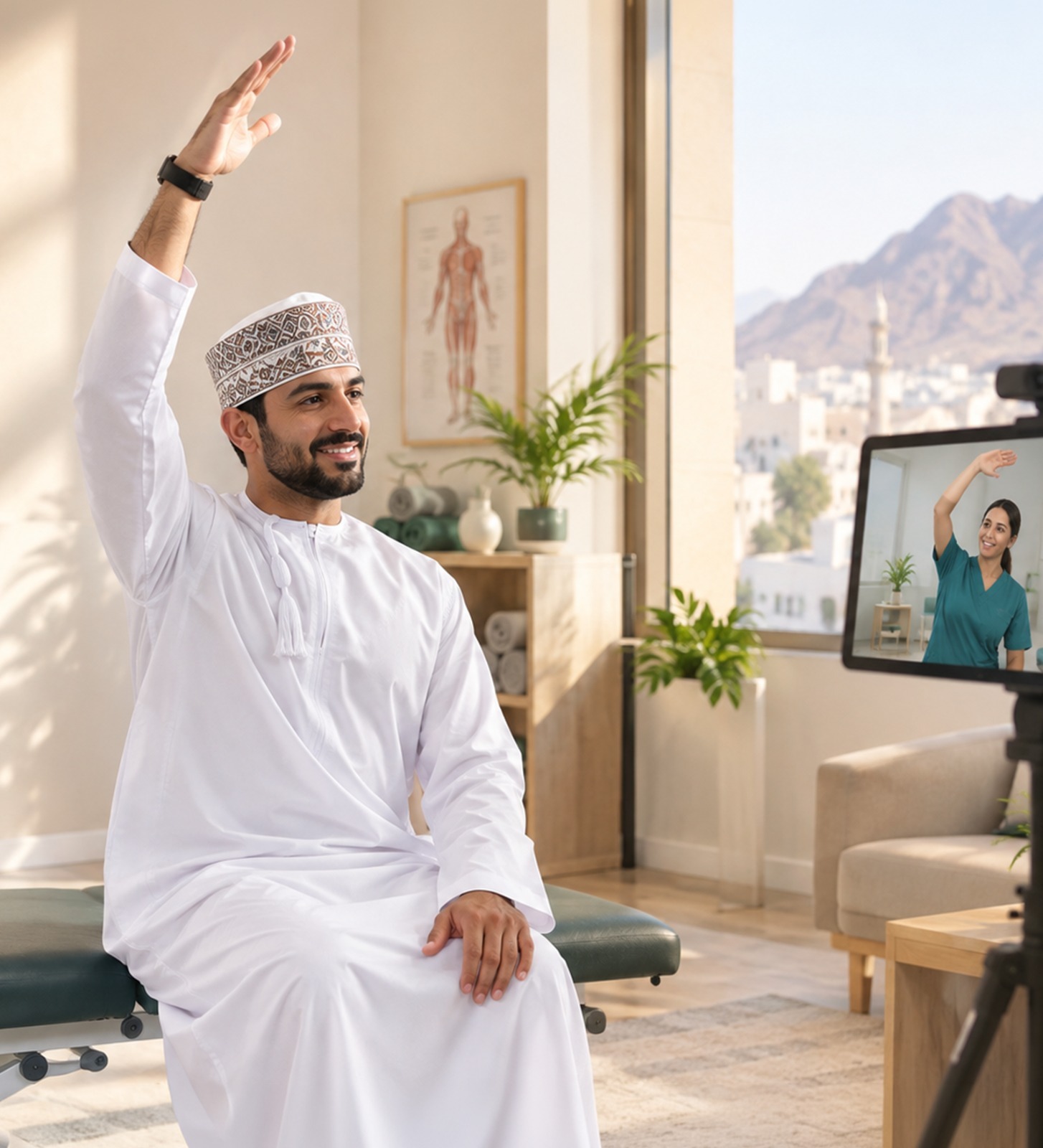 Elbow angle 92°
Movement steady
Repetition 8 of 12
Elbow angle 92°
Movement steady
Repetition 8 of 12

Recovery happens between visits. Until now, so did the guesswork.
A therapist can only watch so many repetitions. Patients are often unsure whether they are doing an exercise correctly, and progress is judged by memory and rough notes.
NovaMotion brings a second pair of eyes into every session. It measures each movement as it happens and keeps an honest, comparable record, so decisions about care are based on what actually took place.
A session, from start to finish
Nothing to wear and nothing to install for the patient. If they can stand in front of the camera, they can begin.
Add the patient
Record the diagnosis, the affected area, medical history and the exercise plan once. Everything stays with the patient's record.
Choose an exercise or a game
Shoulder, elbow, hand grip, hip, knee, ankle, balance, squats and more, or a game that makes the same movements fun.
The camera guides the session
The screen shows the patient's movement live, counts repetitions and points out movements that were not done correctly.
Review the results
See the session summary, follow progress over the weeks, and download a clear report to share.
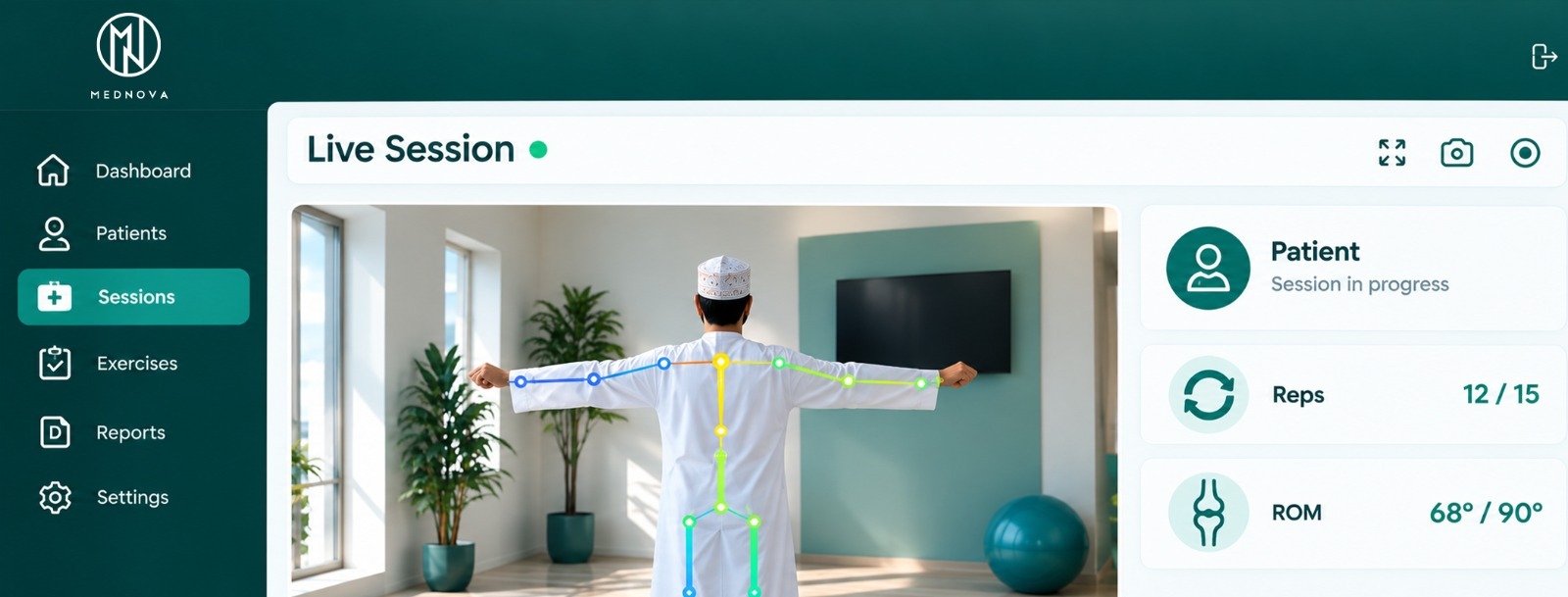
Everything a clinician needs to trust the numbers
It sees the movement, not just the result
Instead of asking how the exercise went, you can watch how the body actually moved, in real time and afterwards.
Measures what matters in recovery
How far a joint moves, how accurate and steady the movement is, balance, smoothness, early signs of tiredness, and one overall recovery score.
Progress you can show
Charts turn weeks of sessions into a picture anyone can understand, for the patient, the family or a referring doctor.
Reports ready to hand over
Generate a clean PDF report for any patient in a click, with results and history in one document.
Made for the clinic
It runs on the clinic computer with a standard webcam. No wearable sensors, no special equipment, no complicated setup.
Private by design
Only clinicians approved by the administrator can sign in, and patient records stay behind that sign-in.
Exercise that feels like play
Repetitive exercises are hard to keep up. Game-based sessions turn the same therapeutic movements into something patients want to do again tomorrow, while every step and movement is still measured for the clinician.
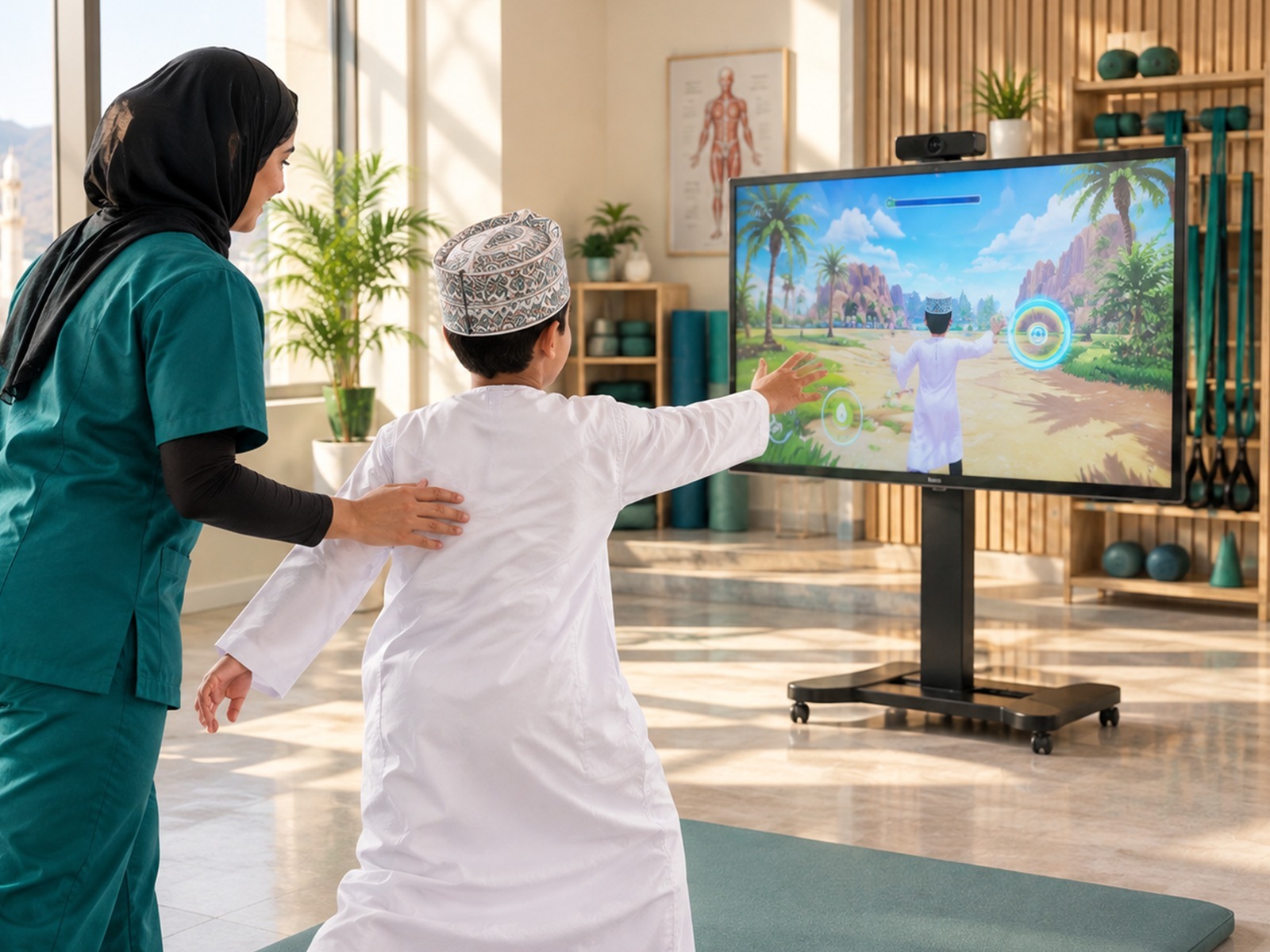
Built around the people in the room
Doctors
Follow each patient's recovery with objective numbers, adjust the plan with confidence and back every decision with evidence.
Therapists
Spend less time counting and note-taking and more time coaching, with the details of every session captured automatically.
Patients
Know straight away whether a movement is right, see improvement week by week, and stay motivated to finish the programme.
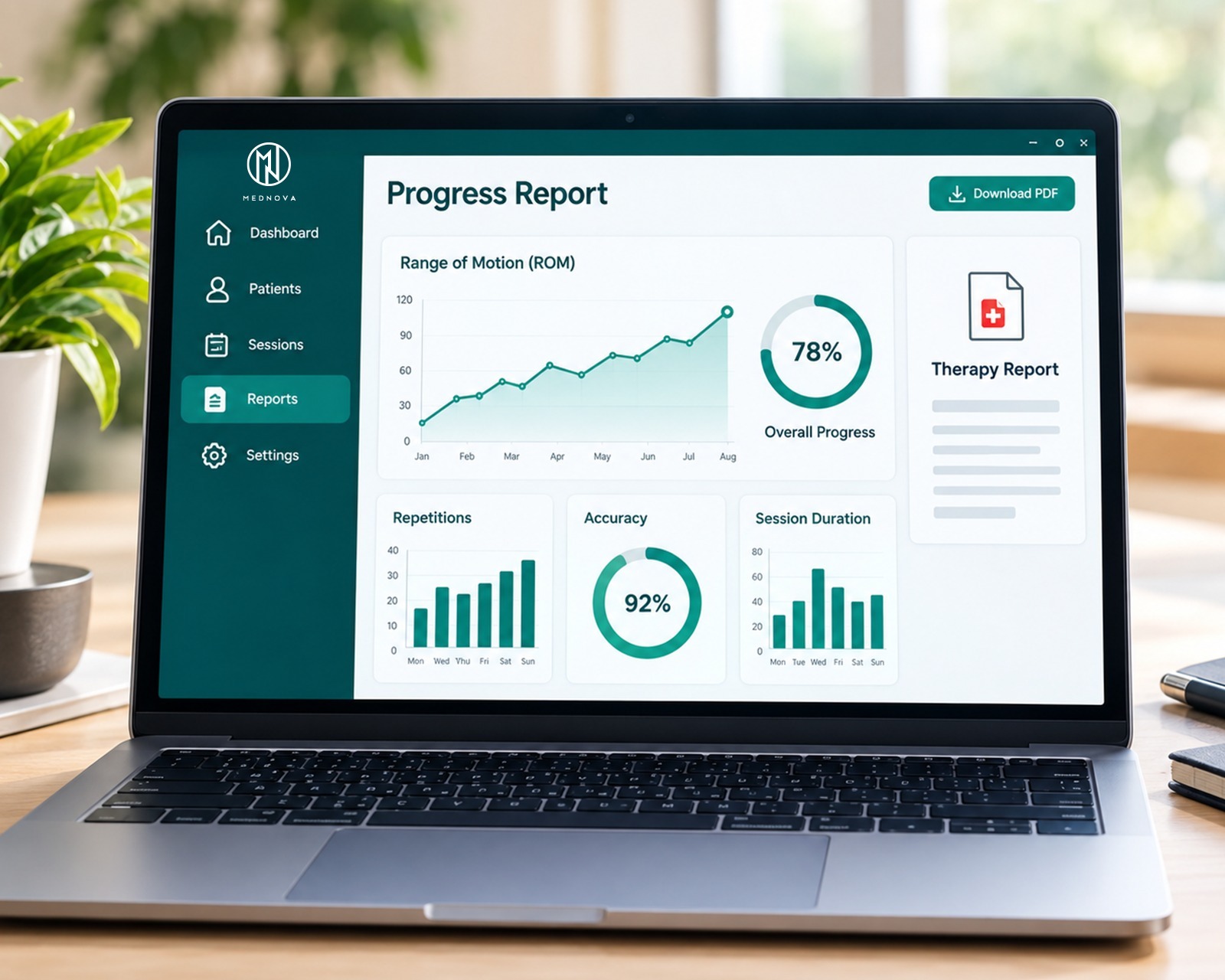
Proof of progress, in a form everyone understands
Every session adds to a clear timeline of the patient's recovery. Trends, comparisons and summaries are built for you, so a review appointment starts with facts instead of recollections.